Showing posts with label ukgovcamp. Show all posts

Sunday, March 17, 2013

UKGC13: Together we have the tools and guts to kill off antiquated democracies

This year's UKGovCamp was a week ago, but Kids and Side Projects have made it difficult to write it up. Here goes though.


I semi-deliberately didn't stand up to pitch a session this year - partly because I was coming out of a too-busy fortnight, and partly I wanted to spend this year worrying less about running a session, and listening more to what people wanted to talk about; over the years, govcamp has taken on a bit of a “zeitgeist” role for me, offering a chance to gauge the ongoing mood.

I think not pitching was actually a good decision - this year's event seemed (to me; YMMV) to be a bit less all over the shop, ideas-wise. Several main threads ended up stringing the day together, which I'll go through below.

For ref, the sessions I wandered into (ripped from the sweet Google Spreadsheet) were:
  1. Identity in general & philosophical + Managing personas and identities in personal and civi spaces, with @curiousc and @pubstrat
  2. Open data in 5 years time + structure in open data community, with @jenit and @hadeybeeman
  3. Real, grass roots collaboration, with @shortblue
  4. Open data skills in communities + taking council information out into communities, with @podnosh and @tiffanystjames
  5. Open Government and the National Action plan, with @timdavies
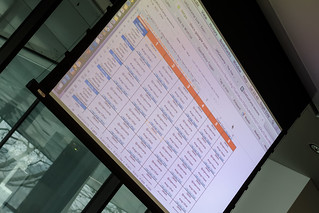
Notes on each session are gradually going up here.

Empty schedule

More than once it felt like the same conversation was taking place in more than one room at a time. As I said, several (really importantt) threads seemed to emerge as being stronger and differenter:

1. Open Data and Social Meda are converging


Gone are the days where it feels like “tech” types are in one set of rooms, and “social” types in another. Or maybe that was just me. But it’s often felt like sessions have fallen either into a “how to do conversation” camp, or “how to do tech” one.

This year, the two camps felt closer, like an estranged couple gradually getting to know each other again after being separated. At one point, I found myself - without shame using data and statistical models as an analogy for individual identity. And the idea of "personal data" (energy efficiency, money saved, etc) makes it even harder to separate figures from debate. Are we at a point where “the network” is becoming less niche about specialist subjects?

I can't work out if geeks are actually cool yet though.

2. Democracy is killing openness


A biggie this one, even worth a separate post. The discussion in the “Grass Roots Collaboration" session was small but fascinating, and delved into the contrast between how the private sector deal with failure, in comparison to the public sector, and what the latter could learn perhaps.

In fact, the theme of failure was the main thread running through the day for me, from social media crisis to how to spin Open Data case studies. And in particular, how failure interacts with democratic process, and vice versa. “Democracy”, often shied away from for being too big a target (too big to fail?), was really the elephant in the room(s).

Can it be a coincidence that “private” companies are often likely to say sorry for public cock-ups, while supposedly-transparent “public” bodies go to great lengths to sweep such events under the rug? Maybe (like yin and yang creating each other) closed groups tend towards (selective) openness, while open groups tend towards (selective) secrecy.
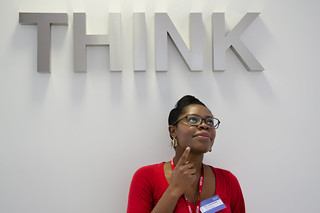

@adewunmi


Which is basically to say, no wonder the "Open policy-making" / Gov 2.0 movement is an uphill struggle. No wonder that ideas of genuinely open debate or technology get spun into poor, PR-driven facsimiles. Right now, Democracy, in its Representative and Accountable form, is all about hiding failure instead of learning from it.

On the Open Data front (which is probably my main interest, it's telling - and, yes, extremely encouraging - that the debate at govcamp has moved on from choosing data and getting it in machine-readable formats, to how to embed date into debate, decision-making, and the wider world.

Coming back to theme 1 above, we are no longer having 'technical" discussions about what web services to use. We are talking about how to adapt to existing democratic processes.

Or if that doesn't cut it, how to change democracy itself.

3. Govcamp Got Guts


... which is where I waffle on about how, like every year, govcamp was unexpectedly not what I was expecting and how full of enthusiasm and renewed vigour I am again etc. (And also mention Podnosh and Delib (and all the other sponsors) for the awesome free bar. Please do go and listen to some Neutral Milk Hotel.)

But unlike previous years, the fallout seemed more... "constructive" this time. Maybe it's an effect of a post-recession economy, some inspiring central government work, the election cycle, Ant n Dec, or those mice.

But maybe it's finally enough years of everyone asking "so what (now)?" afterwards. Maybe it was IBM's pop-up plug-points and sci-fi projector screens, or the snazzy T- shirts, or the return to a one-day format, or the electronic session list or those Bytemark mugs with Your Name on.
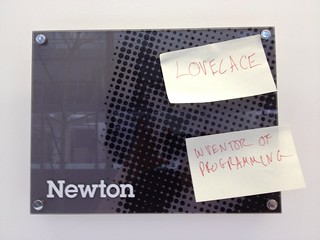
A bit of guerrilla feminism at IBM

I’m not the only one. Do go and read this post from LouLouK too, where she writes:

“Are you happy sitting in a room, being brilliant [but] never letting anyone else actually benefit from that brilliance, or are you going to stick your head above the parapet?”

Whatever it was, it feels like the ideas and debates at govcamp now have much heavier implications outside its gathering. I wonder if what people saw, heard and discussed made them feel more able to challenge the status quo, at a time when new questions, new answers, and fundamentally new ways of doing "government" are correctly needed.

Maybe we’ll find out next year.

Sunday, January 22, 2012

UKGovCamp 2012 - 5x5 (plus one)

So Friday and Saturday were host to the indispensable UKGovCamp 2012 - a huge gathering of people interested in making public stuff better with technology, roughly speaking. I got along to the Friday day all about talking (rather than Saturday's doing), and gorged myself on thoughtmeat. Seriously, I was feeling dizzy by lunchtime.

Somehow I think I managed to carry on talking sensibly enough to feel useful. I also took notes and recordings of the sessions I was in, but here are 5 points from each that struck some kind of chord with me. They're a mix of things people said, and stuff I thought, but I think I can remember which was which.

I've put up audio from each session here.

Session 1: Data Viz + maps issues + challenges
- Vicky Sargent

This seemed to focus largely on data quality.
  • Poor quality data can be exposed through openness.
  • Different users/uses want different levels of quality/reliability. 
  • Bringing together those who want reliability with those who want usability is hard.
  • Getting useful "infoporn" is hard.
  • Start by knowing what you're trying to achieve.

Session 2: Open Data as a Business Model
John Sheridan

This went into how to sustainably fund both open data, and businesses based on it.
  • It's not just a choice between "open"/public and "closed"/private.
  • Perceptions of data reliability (including being up-to-date) are inherently linked to data management and its economics.
  • i.e. Some people think you need a tightly controlled team / contract / business model to maintain data quality... Whereas others think openness is a viable form of reliability. (Cf. Wikipedia "vs" Encyclopedia Brittanica)
  • Licensing offers multiple funding models depending on end-user, a la open source software. Chris Taggart doing a lot of this with openlylocal.com
  • Does the data business model depend on the size/resources of the dataset/audience?

Session 3: LinkedGov tool to clean up & link data!
- Dan Paul Smith

This was a demonstration of the really impressive work being put together by @LinkedGov (http://www.linkedgov.org).
  • Software that extends Google Refine to let you easily link data structures and tidy data.
  • If letting people edit data ("cleaning", "linking", etc), you have to be careful not to introduce "new" data such as assumed defaults for new values. 
  • Suddenly linked/semantic data is starting to look really powerful. I'm almost converted :-)
  • The ability to "modularise" links to other external data lists has huge implications for data as a Distributed Ecosystem.
  • Metadata for what's been edited needs to be accessible and clear, to understand who's done what over the lifetime of a dataset.

Session 4: Data Engagement / Everyday Data
-  me

This was an attempt to think about how to get data into something everyday and, not perceived as a "technical" thing. "Slides" and audio available.
  • People love data if it's about something they love - e.g. football, F1, sales...
  • Language used is massively important - often 2 groups will talk about the same thing, but in totally different ways.
  • A range of "necessary" precision was brought up again - how can you transform the complexity of data into simplicity without misleading?
  • Does data visualisation have to be 'comprehensively accurate', or can it just be enough to get people to ask more questions?
  • Give data context and it's easier to turn data into feedback and so learn from it.
There were some great examples, and some amazing ideas coming out of this for me, which I'll blogpost properly soon.

Session 5: Network society engagement
- Catherine Howe

This wasn't to do with data at all... This was about the advantages offered by moving to a more networked, more engaging approach to decision-making.
  • Catherine claims that the current system of engagement/consultation is actually a method to mitigate our own ongoing disappointment in political participation.
  • If done better, political participation can be enlightening, rewarding, and fun.
  • Bringing people together as part of the consultation process can mean they understand it/others more, and are less disappointed if they don't get what they want.
  • Feedback as part of the consultation is vital to success. In effect, consultation moves towards conversation rather than just gathering views. (Does this that changing people's views is an objective of a networked approach? Does this raise questions around the accuracy of the final result, or does a more involved process and more post-process feedback negate this?)
  • While I generally agree, I wasn't sure how much success from trials was down to using a networked approach, and how much was down to just using a different approach (i.e. novelty can often be fun in itself) - more consultation iterations needed?

I'm running out of time so won't go over Mike Bracken's speech or the Closing Note. Here are 5 random, general points instead:
  • The data landscape is slowly coming together in my head. I know I know something important about it, but I don't know what it is yet. Like Cooper in Twin Peaks. You know, when he has that dream. I need to mull it over and chuck some rocks at a bottle.
  • It feels weird not having twitter usernames on name tags.
  • GovCampers are a bunch of (mostly beardless) ale-swillers. Much to the surprise of the pub.
  • The engineering/development going into the new gov.uk single domain is seriously good.
  • The medium T-shirts this year are definitely smaller than the medium T-shirts last year. Or did I get a ladies' one?

Saturday, January 22, 2011

UKGC11: A General Theory of Data Relativity

First of a small series of small thoughts coming out of UKGovCamp 2011.

One of the key points emerging for me is just how much “data” is tied to the groups or people using it - not just the content, but the structure of it, the tools used to manage it, the background of the data, the assumptions behind it, and so on and so on. This comes up all over the place - standardised, central taxonomies often fall out of favour for being a jack-of-all-trades, useful to none. File formats are a direct result of people wanting data as an easy-to-edit spreadsheet, an easy-to-email PDF, or an easy-to-parse data file.

More fundamentally, even the understanding of what a dataset means becomes embedded in the structure of the data. If something is being measured , what defines that thing? What assumptions are inherent to the way data is measured? Is a van a form of car? More importantly, why are these definitions in place? Reasons are forgotten long before hard drives expire.

If you assume that all data is “relative” - I.e. a combination of the data itself and the people viewing it - what does this mean for linking it? Do we need more effort on translation? Or do we need more effort on fuzzy inferences between metadata, rather than direct mapping? (I suspect the Semantic Web rears its head here, but to me it always feels like a simpler solution is waiting to be seized on.)

Knowing how and where to ask questions about a dataset is a huge part of this - metadata about origins and background is vital; questions help build up an idea of how to fit a dataset into your own world view, your own data model, or your own database. Perhaps development needs to focus on making these links between contexts as transparent as possible, rather than fixing a single, over-arching context in place to fit all.