Showing posts with label democracy. Show all posts

Sunday, March 17, 2013

UKGC13: Together we have the tools and guts to kill off antiquated democracies

This year's UKGovCamp was a week ago, but Kids and Side Projects have made it difficult to write it up. Here goes though.


I semi-deliberately didn't stand up to pitch a session this year - partly because I was coming out of a too-busy fortnight, and partly I wanted to spend this year worrying less about running a session, and listening more to what people wanted to talk about; over the years, govcamp has taken on a bit of a “zeitgeist” role for me, offering a chance to gauge the ongoing mood.

I think not pitching was actually a good decision - this year's event seemed (to me; YMMV) to be a bit less all over the shop, ideas-wise. Several main threads ended up stringing the day together, which I'll go through below.

For ref, the sessions I wandered into (ripped from the sweet Google Spreadsheet) were:
  1. Identity in general & philosophical + Managing personas and identities in personal and civi spaces, with @curiousc and @pubstrat
  2. Open data in 5 years time + structure in open data community, with @jenit and @hadeybeeman
  3. Real, grass roots collaboration, with @shortblue
  4. Open data skills in communities + taking council information out into communities, with @podnosh and @tiffanystjames
  5. Open Government and the National Action plan, with @timdavies
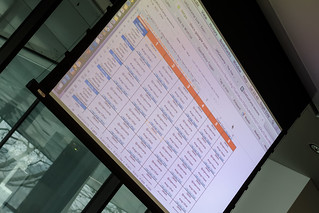
Notes on each session are gradually going up here.

Empty schedule

More than once it felt like the same conversation was taking place in more than one room at a time. As I said, several (really importantt) threads seemed to emerge as being stronger and differenter:

1. Open Data and Social Meda are converging


Gone are the days where it feels like “tech” types are in one set of rooms, and “social” types in another. Or maybe that was just me. But it’s often felt like sessions have fallen either into a “how to do conversation” camp, or “how to do tech” one.

This year, the two camps felt closer, like an estranged couple gradually getting to know each other again after being separated. At one point, I found myself - without shame using data and statistical models as an analogy for individual identity. And the idea of "personal data" (energy efficiency, money saved, etc) makes it even harder to separate figures from debate. Are we at a point where “the network” is becoming less niche about specialist subjects?

I can't work out if geeks are actually cool yet though.

2. Democracy is killing openness


A biggie this one, even worth a separate post. The discussion in the “Grass Roots Collaboration" session was small but fascinating, and delved into the contrast between how the private sector deal with failure, in comparison to the public sector, and what the latter could learn perhaps.

In fact, the theme of failure was the main thread running through the day for me, from social media crisis to how to spin Open Data case studies. And in particular, how failure interacts with democratic process, and vice versa. “Democracy”, often shied away from for being too big a target (too big to fail?), was really the elephant in the room(s).

Can it be a coincidence that “private” companies are often likely to say sorry for public cock-ups, while supposedly-transparent “public” bodies go to great lengths to sweep such events under the rug? Maybe (like yin and yang creating each other) closed groups tend towards (selective) openness, while open groups tend towards (selective) secrecy.
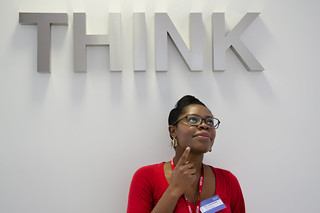

@adewunmi


Which is basically to say, no wonder the "Open policy-making" / Gov 2.0 movement is an uphill struggle. No wonder that ideas of genuinely open debate or technology get spun into poor, PR-driven facsimiles. Right now, Democracy, in its Representative and Accountable form, is all about hiding failure instead of learning from it.

On the Open Data front (which is probably my main interest, it's telling - and, yes, extremely encouraging - that the debate at govcamp has moved on from choosing data and getting it in machine-readable formats, to how to embed date into debate, decision-making, and the wider world.

Coming back to theme 1 above, we are no longer having 'technical" discussions about what web services to use. We are talking about how to adapt to existing democratic processes.

Or if that doesn't cut it, how to change democracy itself.

3. Govcamp Got Guts


... which is where I waffle on about how, like every year, govcamp was unexpectedly not what I was expecting and how full of enthusiasm and renewed vigour I am again etc. (And also mention Podnosh and Delib (and all the other sponsors) for the awesome free bar. Please do go and listen to some Neutral Milk Hotel.)

But unlike previous years, the fallout seemed more... "constructive" this time. Maybe it's an effect of a post-recession economy, some inspiring central government work, the election cycle, Ant n Dec, or those mice.

But maybe it's finally enough years of everyone asking "so what (now)?" afterwards. Maybe it was IBM's pop-up plug-points and sci-fi projector screens, or the snazzy T- shirts, or the return to a one-day format, or the electronic session list or those Bytemark mugs with Your Name on.
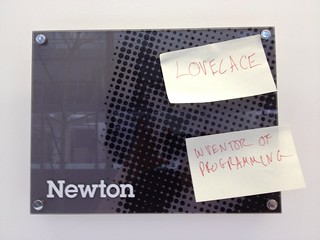
A bit of guerrilla feminism at IBM

I’m not the only one. Do go and read this post from LouLouK too, where she writes:

“Are you happy sitting in a room, being brilliant [but] never letting anyone else actually benefit from that brilliance, or are you going to stick your head above the parapet?”

Whatever it was, it feels like the ideas and debates at govcamp now have much heavier implications outside its gathering. I wonder if what people saw, heard and discussed made them feel more able to challenge the status quo, at a time when new questions, new answers, and fundamentally new ways of doing "government" are correctly needed.

Maybe we’ll find out next year.

Wednesday, December 19, 2012

"Local Government has been Emasculated" (But so has everything else)

From a systemic perspective, the central-vs-local government clash continues to be pretty bemusing.

On the one hand, central government decides how much localism there should be, and giveths and takeths away from local or super-local (regional/LEPs, etc, whichever the trendier?) all the time.

On the other hand, the hierarchy at all levels is being infiltrated by both the private sector, and the "new", networked form of group organisation which has managed to somehow avoid the "postcode lottery" moniker so far.

Lord Heseltine is advocating even more decentralisation away from central government, and offers some small looks into where local-interest power means that Stuff Gets Done, ie. that the hierarchy needs to get out of the way of people just getting together to achieve something.

A few days ago I started thinking about how a community wifi effort (Google Doc) could benefit and be hampered by a "network" approach vs a "hierarchical" approach. (Hint: there's no straightforward answer.) Richard Veryard suggested that the network/hierarchy split (or spectrum) wasn't too useful, which I'm still unpicking, but it did get me thinking about why we organise into different types of group.

It is perhaps most true to say that democratic models are the most complex they have ever been. This is different to saying that "we need to move to a network democracy" or that "it is local government's time".

It is understanding instead that we have a very real situation of multiple, overlapping, integrating models of democracy organisation/objective/philosophy. There is no "one approach fits all" solution because there never was - we just managed to shoehorn the world into the latest mainstream model through a heavy imbalance of power.

Local Government has been emasculated. But so has central government. And perhaps so have ordinary citizens along the way.

I'm going meta. There is no such thing as democracy, but there is such a thing as a democracy network. Which, confusingly, includes networked democracy - but also centralised democracy, European democracy, local democracy and hyperlocal democracy.

Which means there's no point arguing over which one's best, only over how we make sure they all get along.

Friday, November 16, 2012

PCCs, Nuclear Subs, and Mythological Engineering


With the low turnout in the PCC elections yesterday,  and this interesting piece on the construction problems with the UK's new nuclear subs, I can't help but think of Barthes' "Mythologies" and the state we're in regarding symbolism vs engineering.

i. asking the right questions


Barthes lays out a sketchy-but-useful/interesting framework for signs and symbols, and in an ever more mediated world (first through broadcast media such as TV, and increasingly through short-attention information-overload) this framework seems more relevant.

The 3 main questions that a mythological viewpoint helps get at are:

  1. Is what we're doing actually working?
  2. If not, can we find out why not?
  3. And if not, are we willing to identify where our own beliefs are causing those reasons?
None of these are significantly mythological - we can fail at something because we lack understanding or experience, for instance. Indeed failing is also learning, if the context and expectations are set out properly.

But the PCC and Nuclear Sub cases, when viewed from a symbolic, mythological viewpoint, become a lot more understandable.

ii. nothing to see here


In the case of the PCC elections, it's telling that many people voted not to improve the operation and efficiency of their Police force, but to keep out people who they think would make their Police force worse. Question #1 has moved from "is it working?" to "is it not breaking?". Or, in other words, from "how can we improve things?" to "how can we stop things from getting worse?"

This shift in rationale is essential to understand. It shows that politics, a symbol in itself, has become a stronger signifier for maintaining the status quo than for setting out sustainable solutions that involve cross-society engagement. We can say that Democracy has become about keeping people out rather than integrating people in.

The PCC elections are clearly to be seen in a light of localism and "democratic accountability". The elections are a symbol for democratic principles, but ones which have left behind everyday operations of how policy becomes policing. The "polis", in every sense, has become an abstract notion, and can only surely be less empowered because of that.

Not only was it seen to be more important to make the system "votable" than have a working system, the idea of the vote itself took precedence over the voting process.

iii. an aside: symbolic actions


Barthes contrasts the object as a "symbol" to the object as part of an "action" - eg. a woodcutter chopping down a tree performs an action on the tree, and so there is a real-world interaction and effect with the tree. However, the image of a woodcutter cutting down a tree, or a generic image of a tree in itself, is "symbolic" in that it has no direct, real-world consequences. A logo of a tree may act as a standard, but is an indirect effect, and can certainly be detached from the actions it inspires. (Many people find it easier to be inspired by a logo than to act based on inspiration.)

iv. unclear power


Nuclear power is another symbol, as any fan of Dr Strangelove will understand. The paradox with nuclear power is that it is "inherently" (or "naturally", as Barthes would put it) powerful and therefore dangerous - we accept this without question. By wielding "Nuclear power" as a symbol, we also wield an intrinsic argument for more control and global sanctions - because power is concerned with potential rather than actual abilities.

This paradox leads to the problems seen under the HMS Astute nuclear programme. Building nuclear power as a symbol is very different to building nuclear power as a "thing" in the real world.

The paradox is this: You cannot design a machine (or an organisation, or a person) based on symbolic or economic principles.Sure, they can feed into the process, but engineering needs to maintain an inherent, internal coherence to provide a "thing" which functions as a whole. Allow a fragmented economic-political process to take priority, and you will end up with a fragmented machine.

Ironically, the nuclear machine does not depend on the nuclear symbol in order to work, but the symbol is impacted by the effectiveness of the machine. In undermining the effectiveness of the machine, the symbol also devalues itself. 

v. tappity-tap


Churchill said that "Scientists should be on tap, but not on top". I don't believe it's a case of scientists (and engineers, and anyone that designs any kind of process) being on top of  politicians, or vice versa though. The two "sides" have very different briefs and contexts that need to work with each other. There is a "what" and a "how", and the twain will always meet somewhere.

Wednesday, October 10, 2007

One-Click Politics

(Warning: Ooh, wow, this one turned into a big long post...)

David Wilcox has an interesting report on Amnesty using Facebook to recruit people. I should note that I'm not a huge fan of Facebook - I have an account to see how it works, but no contacts in my list. So far, nothing on there particularly makes me want to add any, either. That said, the number of people using it clearly earmarks it for attention on a societal scale.

Two Facebook campaigns that David picks up on - Burma and bank charges - highlight the trend in "Web 2.0 politics" that is worth investigating in more detail. Whether it's worth worrying about it, of course, depends on your point of view on how democracy should work, and what kind of participation we want.

Here's the bit from each of the above campaigns, respectively, that interests me:
Burma:
The Support the Monks in Burma Facebook group has reached 300,000 members, making it one of the largest groups of Facebook, and one of the fastest growing. One thousand people are joining every hour. “We are showing that the eyes of the world are still on Burma, that ordinary people are showing their solidarity and support,” said Johnny Chatterton, the UK co-ordinator...

Bank charges:
A campaign group on Facebook reached over 5,000 members and helped lead to HSBC freezing their plans.

Now, reaching out to so many people is all very impressive. But c'mon now, is this really the modern, networked democracy we've all been looking for - one based, on the whole, on how large a number we can amass?

I think there's a good side to numbers, of course - voting and polling are examples of where they can be used to settle a decision (in the instance of an election, say) or to gauge opinion (before an election). But these are specific uses, and have specific impacts - namely, they're purely about one-way information, from the individual to the central point of data collection. There's no feedback to the individuals, and there's no interaction between individuals. It's a view of people as static individuals, not as a dynamic group.

This is also the problem I have with Facebook in general, and with other schemes such as petitions - the most visible aspect to them all is a quantity: How many people have signed up? How many friends do you have? How many widgets have you added? How many fish have you been sent today? How many campaigns are you a part of? "Participation" takes on a very bounded definition, like an economic view of consumerism. It is transformed, away from the Greek idea of democracy - rhetoric, persuasion, and exercises in evidential argument - and towards an extremely shallow, almost simulated form of populism.

Two threads lead to this, each with different effects. Firstly, the networked aspect of this is hugely influential. The comparison to polls and voting above is unfair, because Web 2.0 politics doesn't cater to individuals in the same way a survey does - it caters to connections, the links between people. Thus, when we say that X number of people have signed up to a campaign, what we may actually mean is that a social network containing that many people have signed up. In terms of the demographics and the "hierarchies" that are then part of that sign-up group, this is a fundamentally different beast. You most likely have a more homogenous group, which raises issues of representation and of organisation - are people only more likely to turn "allegiance" into "action" if their peers do so? Should a more decentralised, local-social group approach be encouraged to take advantage of this?

Secondly, the numbers-led approach encourages, I think, a lot more simplified interaction. Complex interaction paths, requiring greater thought and time, dent these numbers. In the automated, economic, on-line world, these numbers are sales, hence the hullaballoo over Amazon's one-click purchase method. In political terms, a numbers-led democracy seeks to unite the most basic of political argument - emotion - with the same technology. This can be seen in Facebook campaigns and petitions alike, where the reasons for joining in are overtly moral rather than realistic or practical (who's not going to "support" the oppressed if it doesn't actually mean doing something) and the barrier to pledging this support is as low as possible.

The only reason to worry about this trend is if it turns out to be an illusion of power. The bank fees campaign apparently changed the bank's mind. Other "campaigns", such as that to bring back old chocolate bars, support a "realistic" view of power in a network age. But in both of these, the "campaign" is little more than customer canvassing. Opinion and popular hype don't necessarily lead to "reality" - a problem that Samuel L Jackson encountered.

So popular opinion is all well and good, in some circumstances. But at the end of the day, are we setting up our politics to be an easy-riding, least-responsibility, one-click "discussion" shadow?