Following on from data relativity, the second thing that grabbed me at #ukgc11 (UKGovCamp 2011) happened during Will Perrin’s introduction to “Making a Difference with Data”, and followed up in conversation with Helen Jeffrey (@imhelenj) on community-led data. Will talked of comparing his local authorities’ data on lamp-post repair time to his own count for how long a lamp-post had been broken for (encouraging crime). Helen talked about data that a group of volunteers had collected themselves, and then turned into a report to feed into government decision-making.
In both cases, what struck me was that people don’t have such an aversion or fear of data that is often assumed - if they start by generating it themselves.
To go back to data relativity, the most confusing and scary part of data is figuring out the thought processes and assumptions that have gone into a dataset, as well as figuring out what the hell’s important (often around 0.01%-0.5% of the data) and what’s “noise” - to an individual. Self-generated data doesn’t suffer from this, because all the scary background and assumption bits are part of the citizen’s/volunteer’s mindset and experience. Voila, understanding data comes from experience. And as such, successful engagement with data is about creation as well as consumption.
OK, it’s clearly a little more complicated than that, but it’s a principle that’s often far too implicit for some datasets (crowdsourced maps, etc), and far too often forgotten about for others (most centrally-gathered stats). There are also a whole bunch of stereotypes about what “people” “want” from “data”, and often these stereotypes do little except re-establish the status quo. When data comes up against real-world users (yes, even geeks), and the magic “fails to happen”, we’re left wondering if natural engagement is such a given after all.
It’s difficult to get excited about thousands of datasets when you have no idea where to start or where they can be relevant to you. It’s much, much easier to get excited about data that is relevant to to you, that you understand, and that you can see how it will benefit you. I think that’s why I love the idea of Mappiness or Christian Nold’s maps - both involve getting people to create data they find interesting, and through this “personal” data, the need and relevance for other data suddenly becomes instant and appreciated. (For example, if I’m feeling most happy on street X, what other properties does that street have, and how do they relate to me - house prices? Pollution? Streetworks?)
This seems to be an issue that is bubbling along - everyone knows that organisations collect data, for instance, so an open data system worth its salt will take that into account. But there are still assumptions about the scale and complexity of that data, I would argue - whereas really, data can be as simple as counting, and everyone can count.
Sunday, January 23, 2011


Saturday, January 22, 2011
UKGC11: A General Theory of Data Relativity
First of a small series of small thoughts coming out of UKGovCamp 2011.
One of the key points emerging for me is just how much “data” is tied to the groups or people using it - not just the content, but the structure of it, the tools used to manage it, the background of the data, the assumptions behind it, and so on and so on. This comes up all over the place - standardised, central taxonomies often fall out of favour for being a jack-of-all-trades, useful to none. File formats are a direct result of people wanting data as an easy-to-edit spreadsheet, an easy-to-email PDF, or an easy-to-parse data file.
More fundamentally, even the understanding of what a dataset means becomes embedded in the structure of the data. If something is being measured , what defines that thing? What assumptions are inherent to the way data is measured? Is a van a form of car? More importantly, why are these definitions in place? Reasons are forgotten long before hard drives expire.
If you assume that all data is “relative” - I.e. a combination of the data itself and the people viewing it - what does this mean for linking it? Do we need more effort on translation? Or do we need more effort on fuzzy inferences between metadata, rather than direct mapping? (I suspect the Semantic Web rears its head here, but to me it always feels like a simpler solution is waiting to be seized on.)
Knowing how and where to ask questions about a dataset is a huge part of this - metadata about origins and background is vital; questions help build up an idea of how to fit a dataset into your own world view, your own data model, or your own database. Perhaps development needs to focus on making these links between contexts as transparent as possible, rather than fixing a single, over-arching context in place to fit all.
One of the key points emerging for me is just how much “data” is tied to the groups or people using it - not just the content, but the structure of it, the tools used to manage it, the background of the data, the assumptions behind it, and so on and so on. This comes up all over the place - standardised, central taxonomies often fall out of favour for being a jack-of-all-trades, useful to none. File formats are a direct result of people wanting data as an easy-to-edit spreadsheet, an easy-to-email PDF, or an easy-to-parse data file.
More fundamentally, even the understanding of what a dataset means becomes embedded in the structure of the data. If something is being measured , what defines that thing? What assumptions are inherent to the way data is measured? Is a van a form of car? More importantly, why are these definitions in place? Reasons are forgotten long before hard drives expire.
If you assume that all data is “relative” - I.e. a combination of the data itself and the people viewing it - what does this mean for linking it? Do we need more effort on translation? Or do we need more effort on fuzzy inferences between metadata, rather than direct mapping? (I suspect the Semantic Web rears its head here, but to me it always feels like a simpler solution is waiting to be seized on.)
Knowing how and where to ask questions about a dataset is a huge part of this - metadata about origins and background is vital; questions help build up an idea of how to fit a dataset into your own world view, your own data model, or your own database. Perhaps development needs to focus on making these links between contexts as transparent as possible, rather than fixing a single, over-arching context in place to fit all.
Tuesday, January 11, 2011
Why democracy is getting routed around
Recent events have brought me back to thinking about an old topic - what's the best way of making a point? This time round, though, I'm slightly more fatalistic about it all.
What seems more obvious now is that established democracy, in its current form, is being outpaced - traditional representative democracy is no longer a priority, to put it bluntly.
Why? Two reasons:
1. Communication has changed. Everyone knows this. Everyone is routing around voting. Electronic voting is boring - we have electronic memes now. Public meeting videos are boring - we have hashtags now. I am talking to national and international strangers about the future of politics more than I talk to my neighbours. Never mind AV, we need something more than simple, single representation.
2. The topics of politics have changed - or, rather, they change ever faster and faster. We have a while to go before the singularity, but nonetheless, we no longer believe the future is 'distant'. Good sci-fi is becoming rare. We do not dare to imagine what we'll be able to do in 4 years' time let alone know what government party we'll want to cope when we get there. The future is flexible, party politics is boring. Far better to rely on the fluidity of networks and social knowledge, than on the heavy infrastructures of politics.
We have secure and instant comms, so we have Wikileaks. We have flashmobs, so we have street protests. We have crowdsourcing, so we have inspirational projects, both as showcases by individuals and as industry-standard, open source giants. Bit by bit, there are people doing stuff, instead of waiting for politics to change for them.
Screw "Government 2.0". Food prices, climate change, economic sustainability, education, wisdom? The next decade will tell us if modern democracy is even out of beta-testing yet. If government is to survive in any respectable form beyond its current version, it needs to "get" reality - the kind of reality that everything else is now trying to work out how to do better.
What seems more obvious now is that established democracy, in its current form, is being outpaced - traditional representative democracy is no longer a priority, to put it bluntly.
Why? Two reasons:
1. Communication has changed. Everyone knows this. Everyone is routing around voting. Electronic voting is boring - we have electronic memes now. Public meeting videos are boring - we have hashtags now. I am talking to national and international strangers about the future of politics more than I talk to my neighbours. Never mind AV, we need something more than simple, single representation.
2. The topics of politics have changed - or, rather, they change ever faster and faster. We have a while to go before the singularity, but nonetheless, we no longer believe the future is 'distant'. Good sci-fi is becoming rare. We do not dare to imagine what we'll be able to do in 4 years' time let alone know what government party we'll want to cope when we get there. The future is flexible, party politics is boring. Far better to rely on the fluidity of networks and social knowledge, than on the heavy infrastructures of politics.
We have secure and instant comms, so we have Wikileaks. We have flashmobs, so we have street protests. We have crowdsourcing, so we have inspirational projects, both as showcases by individuals and as industry-standard, open source giants. Bit by bit, there are people doing stuff, instead of waiting for politics to change for them.
Screw "Government 2.0". Food prices, climate change, economic sustainability, education, wisdom? The next decade will tell us if modern democracy is even out of beta-testing yet. If government is to survive in any respectable form beyond its current version, it needs to "get" reality - the kind of reality that everything else is now trying to work out how to do better.
Wednesday, December 15, 2010
Tis the Season To Be Open
I apologise in advance - this post was originally a small comment on Paul's post, then turned into a blogpost here, and a bit of a rambling one at that. Hopefully it raises some points of interest, and hopefully I can return to some of them in future posts. The area is, ironically, complex in itself.
Paul Clarke has a nice summary of systems complexity generally, and the eternal battle between getting things done, and pleasing everyone. Fortunately I haven't seen the original stories on the Christmas Tree in question, so have no idea what the context is. I prefer it like that.
I think Paul is right to highlight the role of open data as we move forwards into a technical democracy, and the possible solutions/problems coming in as a result - I think there's a good chance that transparency can lead to ever-decreasing circles of receipt-checking, process justification etc, and the whole country implodes in a swamp of exclamation marks and daily mail headlines.
These 2 questions seem rather pertinent, IMHO: "And with what discretion? Authorised by whom?" - Are these the same issues we've been grappling with for years anyway, in the form of representative democracy? On a broad picture, it's not necessary for all citizens to be involved in all decisions all of the time - so we vote for the person we think we can trust most with power. We, as voters, are handing over discretionary power so that someone else is creating a world we want to live in. I call this "trust", because even today there's no way I can know (or want to know) everything my MP is up to. I have a wife and kids and a job.

I've yet to be convinced that the drive for more transparency isn't just a way of getting us to trust politicians less. The over-riding message from on high seems to be that transparency is there to hold people to account - which I think is a real shame, as open data is far more powerful as a platform for collaboration than accusation.
Transparency as distrust leads to a bizarre situation in which people we've "trusted" via our vote are then afraid to apply that power - especially considering a vote is local, while headlines are national or global. Worse, it can drive important decisions further into obscurity and complexity to avoid such scrutiny (and here it's hard not to draw comparisons with the banking industry as a warning).
Perhaps part of the problem is believing that cost is the deciding factor in how accountable (and hence transparent) a decision-process should be. But cost says nothing of either complexity or impact - both of which are much more important in deciding the "suitability" of decisions, I would say.
Cf. two other realms - banking, as mentioned already, and open-source software.
On one hand, the uselessness of auditors in predicting the collapse of banks serves to show how bad it is to have systems that can rapidly create complex models around themselves. Compare this to how open-source software operates - for a project to be sustainable, it is vital that complexity is managed, and that the code is readable by anybody. If the code is unreadable, it grows more slowly, is more prone to bugs and security risks, and is less maintainable. Both designing and refactoring code are essential to ensure a solid output.

Can we apply these lessons to government decision-processes? If transparency is the way forwards, then I think we have to - sure, there are fundamental differences between software (which, for instance, can be forked) and a democracy (which can't, quite so easily). But as things become more open and "many eyes" start taking peeks, the productivity-gains and effectiveness of open data mean that we cna't just assume that openness is enough. Openness needs to be accompanied by feedback - the same constant re-factoring process that goes into software engineering.
In other words, it is not enough to use transparency to justify decisions already made, and to prevent bad decisions being made in future through the threat of later accountability. Openness in data needs to go hand-in-hand with an openness to change - to influence new ways of contributing, of collaborating, and of voting for those who we trust. Even new ways of thinking and feeling about why the decisions are being made in the first place.
Paul Clarke has a nice summary of systems complexity generally, and the eternal battle between getting things done, and pleasing everyone. Fortunately I haven't seen the original stories on the Christmas Tree in question, so have no idea what the context is. I prefer it like that.
I think Paul is right to highlight the role of open data as we move forwards into a technical democracy, and the possible solutions/problems coming in as a result - I think there's a good chance that transparency can lead to ever-decreasing circles of receipt-checking, process justification etc, and the whole country implodes in a swamp of exclamation marks and daily mail headlines.
These 2 questions seem rather pertinent, IMHO: "And with what discretion? Authorised by whom?" - Are these the same issues we've been grappling with for years anyway, in the form of representative democracy? On a broad picture, it's not necessary for all citizens to be involved in all decisions all of the time - so we vote for the person we think we can trust most with power. We, as voters, are handing over discretionary power so that someone else is creating a world we want to live in. I call this "trust", because even today there's no way I can know (or want to know) everything my MP is up to. I have a wife and kids and a job.
I've yet to be convinced that the drive for more transparency isn't just a way of getting us to trust politicians less. The over-riding message from on high seems to be that transparency is there to hold people to account - which I think is a real shame, as open data is far more powerful as a platform for collaboration than accusation.
Transparency as distrust leads to a bizarre situation in which people we've "trusted" via our vote are then afraid to apply that power - especially considering a vote is local, while headlines are national or global. Worse, it can drive important decisions further into obscurity and complexity to avoid such scrutiny (and here it's hard not to draw comparisons with the banking industry as a warning).
Perhaps part of the problem is believing that cost is the deciding factor in how accountable (and hence transparent) a decision-process should be. But cost says nothing of either complexity or impact - both of which are much more important in deciding the "suitability" of decisions, I would say.
Cf. two other realms - banking, as mentioned already, and open-source software.
On one hand, the uselessness of auditors in predicting the collapse of banks serves to show how bad it is to have systems that can rapidly create complex models around themselves. Compare this to how open-source software operates - for a project to be sustainable, it is vital that complexity is managed, and that the code is readable by anybody. If the code is unreadable, it grows more slowly, is more prone to bugs and security risks, and is less maintainable. Both designing and refactoring code are essential to ensure a solid output.
Can we apply these lessons to government decision-processes? If transparency is the way forwards, then I think we have to - sure, there are fundamental differences between software (which, for instance, can be forked) and a democracy (which can't, quite so easily). But as things become more open and "many eyes" start taking peeks, the productivity-gains and effectiveness of open data mean that we cna't just assume that openness is enough. Openness needs to be accompanied by feedback - the same constant re-factoring process that goes into software engineering.
In other words, it is not enough to use transparency to justify decisions already made, and to prevent bad decisions being made in future through the threat of later accountability. Openness in data needs to go hand-in-hand with an openness to change - to influence new ways of contributing, of collaborating, and of voting for those who we trust. Even new ways of thinking and feeling about why the decisions are being made in the first place.
Thursday, November 25, 2010
Structured data: Accessible magic?
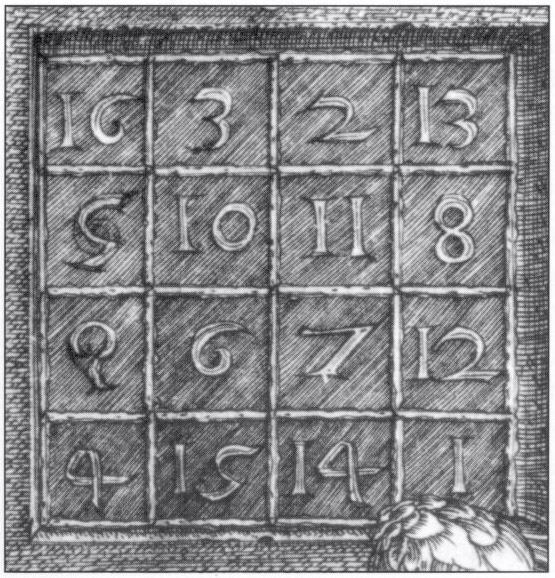
Magic Numbers (source)
Have you ever dreamt in SQL? Few of us have, and we only ever speak of it in hushed, yet secretly astounded tones. Database development is a weird way of looking at the world. Those who venture into it too deeply may never come back to being "normal".
But at the same time, it's also like any language - reaching a state of fluidity involves a fundamental shift in thinking. To think in French is to adopt a new philosophy, and the same is true of database logic; linking and manipulating rows of data is a world away from editing each row by hand.
To explain the importance of structured data, is it important to first get across this conceptual paradigm shift? Is the ultimate draw of structured data tied inherently to a new way of seeing the world? One in which we, as data/content hackers don't see the data at all, but merely instruct a computer to do stuff with it.
Maybe this explains the "format divide" between those publishing in "closed" formats, and those publishing in open ones. If you do not know how to automate the data-munging process, then you do stuff by hand, you take a long time to do it, and you have absolutely no need for "structures" other than those in your head.
This happens everywhere, all the time: half the world lives in Excel during office hours. At some point, computers became popular as difference engines, but not necessarily good at being them. Human operators became part of the machines, rather than directors of them. In a way, this mirrored the huge factory production lines, and the endless supermarket checkouts, so most humans simply accepted this as the new way of life. Any sufficiently different technology is a form of magic. Processing as a manual task.
This happens today. Never forget that. Seeing data is more important than defining a structure for it, because structure is *hard*. Datasets have peculiarities, errors, and specifics that resist simple structuring. And changing these structures is effort - effort that involves communicating these changes to other. In short, it's easier to stick with "sloppy" data if you're not using the right tools. It's even easier if the other people using the data don't care about the tools either. Content is King.
So how do we bridge this divide between "manual data labour" and "magic"? On the up side, I believe it must happen, as data - and talk of data - becomes a public matter. Those not structuring their data will need to structure it, or face a new kind of exclusion - call it "un-APIness" perhaps.
But this doesn't help us to move into a culture of automation, of magic, which I think is important because it determines what you *believe* you can do with data. Understanding structured data is essential in coming up with new services, new applications, and new answers.
Working with people to build answers will help too. It's not enough to just want "raw data now" - to build bridges, we need to build real things based on data. We, as geeks, need to find out what people actually want. We need to show that questions can be answered with "magic", but also be open enough to demonstrate that structuring data has a direct impact on what can be done, and how quickly.
Change the tools. Rethink processes. It's time to end the conveyor-belt, factory line approach to data.
Sunday, January 24, 2010
UKGovCamp 2010 - a far-too-lengthy write-up
Yesterday was UK GovCamp 2010, a gathering of people interested in how (roughly defined) government can be taken forwards using the Internet. The day was crafted lovingly by Dave Briggs and hosted excitingly at Google HQ in London. Here's a quick rundown of where I was, what I saw, and what I'd attempt to think about the day after if I had any brain left.
Session 1 was an exercise in getting data geeks talking to data users - hypothetically, at least. The room broke into 5 or so groups, each looking at the problems that members of the public might face around certain topical issues, such as road chaos, sporting events, or sexual health. To get us thinking, we first asked what kind of information would the public want/need for each of these. In the second half, the data geeks migrated to a different group to see how data could help with answering this.
I'm not sure I came to any particular answers about either road chaos or sporting events, but did find it a useful way of breaking down the issue. Without realising it, I'd probably stumbled into the first recurring theme of my day - usability of data. Some notes of interest:
I started by taking people through what we'd done with data4nr.net in terms of UI, XML and tying it into external services like data.gov.uk. Most excellently, Richard Stirling was on hand to fill in about the latter, which probably helped to raise the issue of how we actually tie all this data together. Notes on all this below:
Finally, session 5 saw Steph Gray (slide here), Anthony Zacharzewski (links to slides) and Paul Clarke talking about persuading politicians and bureaucrats of the value of digital engagement. A great talk all round, with some inspiring, and almost crafty, thoughts being put forward about how to make websites and influence people:
OK, this post was a little longer than I thought it was, and now my stomach is rumbling. Cheers to all for a great day, and look forward to seeing the thoughts that take place in its aftermath. Keep the momentum.
Further links
Dave Briggs' write up
Sarah Lay's write up
Paul Clarke's (excellent) photo set
My own photos
Everyone's tagged photos on Flickr
Tumblr blog
Kevin Campbell-Wright's write up
Neil William's write up
David Wilcox's array of videos
Session 1 was an exercise in getting data geeks talking to data users - hypothetically, at least. The room broke into 5 or so groups, each looking at the problems that members of the public might face around certain topical issues, such as road chaos, sporting events, or sexual health. To get us thinking, we first asked what kind of information would the public want/need for each of these. In the second half, the data geeks migrated to a different group to see how data could help with answering this.
I'm not sure I came to any particular answers about either road chaos or sporting events, but did find it a useful way of breaking down the issue. Without realising it, I'd probably stumbled into the first recurring theme of my day - usability of data. Some notes of interest:
- Data may exist in a central database, but that doesn't mean everyone will be accessing it for the same reason and/or/therefore by the same means. Different groups of people have different networks - football supporters might check their club site for news, for example. Local residents might check a council site, or a paper newsletter, or even just handy signs put up on the side of the road for future travel "alerts". A good reminder why data shouldn't be tied to a particular "portal".
- It's far too easy to focus on using the latest devices to make getting data out easy. But that doesn't mean it reaches people we want it to reach. (One reason I'm so excited about Newspaper Club.)
- We draw data from many, many different places to form a decision or an opinion, e.g. form local authorities, central figures, news, private sources, etc. Linked data is probably hugely important in joining all this up, but it's also a process that we, as humans, do naturally and constantly. I think there's a big question about how we tie these two worlds together. Too big for this post though.
I started by taking people through what we'd done with data4nr.net in terms of UI, XML and tying it into external services like data.gov.uk. Most excellently, Richard Stirling was on hand to fill in about the latter, which probably helped to raise the issue of how we actually tie all this data together. Notes on all this below:
- One thing that came out of the talk around data.gov.uk is where duplicates appear (as everyone is cataloguing data, with a fair bit of overlap), but without any real way of knowing so. Unique IDs are like, really, really important, but even the definition of one is subject to interpretation problems. Simon Field noted that some users, for example, want to treat amended data as a "new" dataset, while others don't. "Unique" is subjective, perhaps. I get the impression this is going to take a while to bash out.
- Andrew Walkingshaw of Timetric (also one of the sponsors) noted two extremes of presenting data to people - "either lie to them, or freak them out". I think the extent to which either of these is necessary depends on who you're making the data public to - or, who is your audience? Different people have different training, and therefore different expectations about what the data represents. How do we manage this, or integrate it with our processes and applications?
- Maybe not everyone needs to understand data - just those in the argument? e.g. if a journalist uses some data to come to a slightly
suspectheadline-grabbing conclusion, are there people who can re-run the data and verify that? Coming out of that, do we have forums where such verifications and/or dispute can be raised legitimately? - And to return to the idea of defining metadata, there is still a question about whether definitions should be "standardised" (i.e. everyone shares the same vocabulary), or if we accept that everyone has their own "language" and the challenge is to map between these somehow. If the former, is it practical to define one in advance, or just let people make their own, in a more organic nature?
I think there was lunch at this point.
Session 3 was on Using Wordpress in Government, run by Simon Dickson of Puffbox. I've been doing a fair bit of integrating PHP sites with Wordpress this year, so was interested in hearing about what other people had done with it, and how. A lot of the session seemed to be extolling the power of Wordpress rather than focus on the grittier details of rolling it into a project, process or workplace, but it was interesting to hear where it's being used, and a great chance to finally meet Steph Gray in person.- Good to note that about half of all (central?) government departments are "dipping their toes" into Wordpress, although perhaps under the second theme of the day - covert innovation which I'll pick up at the end.
- Good point from Simon - that for all the talk about re-using software, making sites, etc, "Wordpress has done it - we are doing it." Good tools make exploration easy, and make it easier to experiment with little nuggets of progress without too much risk/cost/project management. We have good tools already that mostly just need tweaking, why not use them?
- Wordpress is great for swapping content between sites, as everything is available as RSS feeds. I suspect this ties into my session on finding and filtering data more than I realise.
Finally, session 5 saw Steph Gray (slide here), Anthony Zacharzewski (links to slides) and Paul Clarke talking about persuading politicians and bureaucrats of the value of digital engagement. A great talk all round, with some inspiring, and almost crafty, thoughts being put forward about how to make websites and influence people:
- Talk about activities, not tools. Talk about how what you want to do results in outcomes. Decision makers like to see a direct link between what you propose and what gets saved.
- Use narratives, storytelling. But be careful about who you include in your stories - different viewpoints and people are perceived in different ways. Sometimes people love the idea of appealing to the "main in the street". Other times the same man is seen as, say, unreliable or anecdotal.
- Terms and words are political, as I've noted before. Use terms, especially "buzzwords" carefully, as they may "belong" to particular groups. Technical speak suffers from the same problem, I'd say. WTF do AJAX, Web2.0 and WTF mean anyway?
Themes
The two recurring threads I really picked up on during the day were:- Usability of Data - How can we make data as a whole easier for everyone to find? How do we know what data is out there, what it means, and what it can/can't be used for? How can we access it other than clever websites?
- Covert Innovation - A lot of the exciting stuff in government is being done "under the radar". This, in itself, is not necessarily a problem, but there were a couple of tales around the idea that successful efforts would be prevented if they were made more public - for various reasons. I think currently there are a lot of conversations going on, but within almost hushed tones - tones which can only get loud once this success has reached critical mass and gone "mainstream" to the point where it can't be covered up any more. The tales of Gordon Brown giving Tim Berners-Lee free reign were great, but really not enough. Hiring a hugely respected scientist is quite different to trusting your own staff.
Failure is an option, even necessary, but a lot of the time organisations believe that it isn't - perhaps because they're used to thinking in terms of large scale projects (= large scale failure)? Contrariwise, a lot of the efforts seen at GovCamp were small scale innovation which can and even should fail quickly and easily (e.g. "does this Wordpress plugin do what we want?" Click. Install. "No." Learn. Move on.) The move towards opening up data is all about risk management. Bang the rocks together.
OK, this post was a little longer than I thought it was, and now my stomach is rumbling. Cheers to all for a great day, and look forward to seeing the thoughts that take place in its aftermath. Keep the momentum.
Further links
Dave Briggs' write upSarah Lay's write up
Paul Clarke's (excellent) photo set
My own photos
Everyone's tagged photos on Flickr
Tumblr blog
Kevin Campbell-Wright's write up
Neil William's write up
David Wilcox's array of videos
Wednesday, July 01, 2009
Transparency should not be for Blame
I was going to write a small blog post, but Peter Kawalek's discourse on what isn't said around MP expenses says what I was going to say, and far, far more elegantly.
I'm encouraged by the flurry of interest and activity surrounding the release of expenses data, but at the same time I can't help but question whether it really matters after all that.
Did people really care when this all hit the headlines? I, for one, got the impression that the weeks of blathering waffle on the radio and in the papers was being drummed up and forced on to stage by either politicians wanting to embarrass other politicians, politicians wanting to un-embarrass themselves, or media outlets looking to embarrass politicians - which, incidentally, is like taking sweets from a baby in a sweet shop.
For everyone else, talk of expenses was dull, dull, dull, and generally a good excuse to flick channel, turn off the radio, or go and do something interesting like make pasta shakers.
The point of this rant is this then: Is it important to spend time and energy releasing the kind of data that, while ideas of transparency might be in the public eye, doesn't actually either a) contribute to our understanding of the state of things, or b) offer a positive solution?
After all, the main reason for releasing expenses data is to find people to point fingers at, rather than to actually applaud MPs for not spending money. (Personally, I'm thinking of sending my MP some better coffee than the Kenco stuff he orders...)
Data can be good. Transparency can be good. But shouldn't we be careful that we're not just opening up an attitude of blame culture? Can we avoid a society transparency and monitoring are no better than CCTV or a nanny state - a culture of wrist-slapping people for their mistakes, rather than encouraging and rewarding valued behaviour?
I'm encouraged by the flurry of interest and activity surrounding the release of expenses data, but at the same time I can't help but question whether it really matters after all that.
Did people really care when this all hit the headlines? I, for one, got the impression that the weeks of blathering waffle on the radio and in the papers was being drummed up and forced on to stage by either politicians wanting to embarrass other politicians, politicians wanting to un-embarrass themselves, or media outlets looking to embarrass politicians - which, incidentally, is like taking sweets from a baby in a sweet shop.
For everyone else, talk of expenses was dull, dull, dull, and generally a good excuse to flick channel, turn off the radio, or go and do something interesting like make pasta shakers.
The point of this rant is this then: Is it important to spend time and energy releasing the kind of data that, while ideas of transparency might be in the public eye, doesn't actually either a) contribute to our understanding of the state of things, or b) offer a positive solution?
After all, the main reason for releasing expenses data is to find people to point fingers at, rather than to actually applaud MPs for not spending money. (Personally, I'm thinking of sending my MP some better coffee than the Kenco stuff he orders...)
Data can be good. Transparency can be good. But shouldn't we be careful that we're not just opening up an attitude of blame culture? Can we avoid a society transparency and monitoring are no better than CCTV or a nanny state - a culture of wrist-slapping people for their mistakes, rather than encouraging and rewarding valued behaviour?
Subscribe to:
Posts (Atom)